DHL’s Shenzhen Expansion Makes Air Cargo Capacity a Booking-Control Question

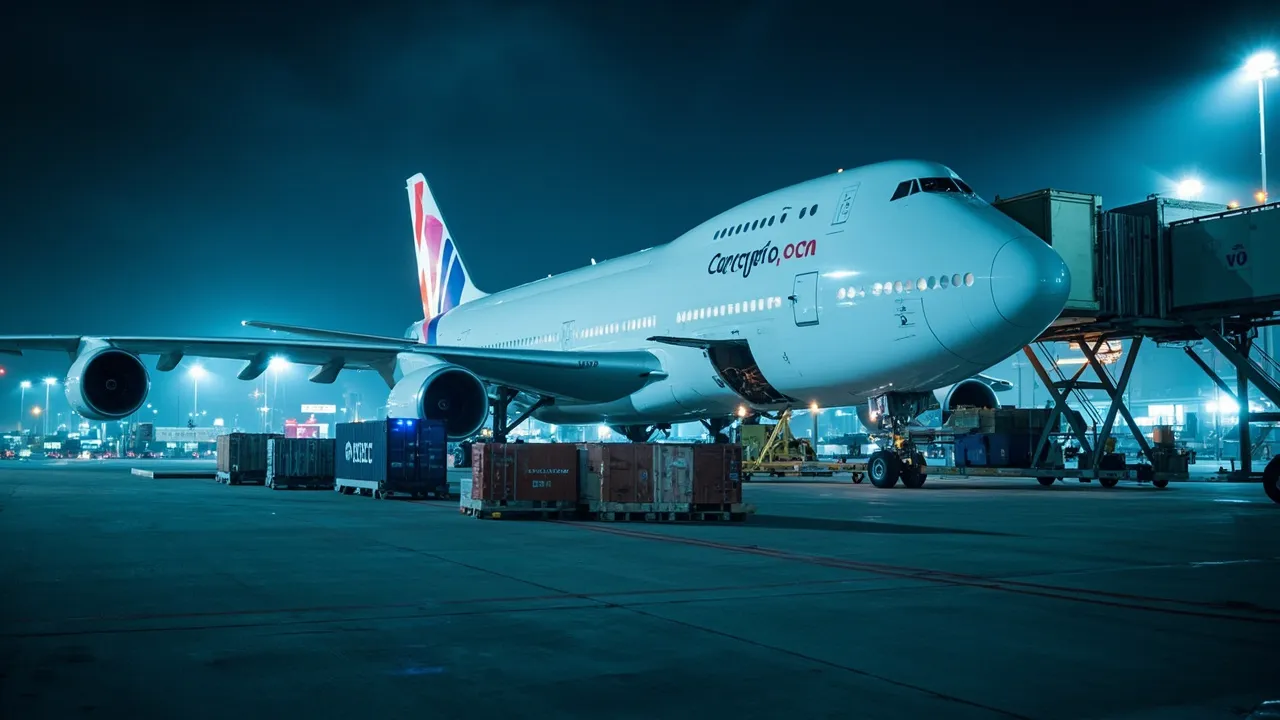
DHL Express has tripled daily processing capacity at its Shenzhen gateway, a substantial addition in one of the world’s most important manufacturing regions. For exporters and freight forwarders, however, a larger terminal does not automatically mean that every urgent shipment will depart sooner.
Terminal throughput is only one link in the air cargo chain. Aircraft space, departure frequency, acceptance cutoffs, security screening, ground handling, allocation rules, and disruption recovery still determine whether a booking becomes a reliable delivery. The operational response should therefore be more precise than simply shifting volume toward a newly expanded gateway.
The real opportunity is to turn new capacity into a measurable booking control.
What tripled terminal capacity actually changes
FreightWaves reports that DHL completed a $204 million expansion of its Shenzhen Bao’an International Airport “super gateway.” Daily shipment-processing capacity has increased to 992 tons, three times the previous level. At full capacity, annual throughput is expected to exceed 286,000 tons—about 10 times the volume handled by the former gateway.
Those numbers matter because processing bottlenecks can consume the time saved by premium air transport. A facility with greater sortation, storage, inspection, and monitoring capacity can accept more freight without creating the same queue at each handling stage. FreightWaves says the gateway uses high-speed sorting, automated storage, robotic arms, and automated guided vehicles.
The investment also supports more direct international movements. DHL introduced a Boeing 767 freighter route connecting Shanghai, Bangkok, Bahrain, and Brussels, while the Shenzhen gateway can reduce the need to truck some shipments to the company’s main Hong Kong terminal for intercontinental connections.
For manufacturers of semiconductors, AI infrastructure, healthcare products, batteries, and other high-value goods, fewer handoffs can reduce handling risk and protect cutoff time. Yet none of these benefits should be assumed at the purchase-order level. They must be demonstrated lane by lane.
Processing capacity is not flight capacity
A terminal can sort 992 tons per day while a particular destination still has limited uplift. The distinction is simple but frequently lost in commercial discussions:
- Terminal capacity measures how much freight the facility can receive, process, store, and transfer.
- Flight capacity measures the payload available on specific departures.
- Usable allocation is the portion a carrier or forwarder will actually commit to a customer.
- Service reliability reflects whether accepted freight departs, connects, clears, and delivers as promised.
Marketwide conditions make that separation especially important. Supply Chain Dive reported that global air cargo spot rates fell 6% month over month in July 2026, but remained 28% above the prior year at $3.12 per kilogram. Global volumes increased 4% year over year, while the dynamic load factor reached 61%, two percentage points higher than a year earlier.
The same report found rates from Northeast and Southeast Asia to North America were both 33% higher than in late February. In other words, a softer global outlook does not guarantee cheap or plentiful space on a specific Asian export lane. AI-related cargo, geopolitical disruption, fuel volatility, and frontloaded inventory can produce sharp differences by corridor and week.
Define booking controls by service need
Forwarders should establish rules before the booking desk selects a service. A useful control starts with the shipment’s consequence of delay rather than its marketing label.
Time-critical freight needs a confirmed departure, documented cutoff, protected connection, and named recovery option. If a missed flight would stop production or delay a clinical delivery, the booking should identify the next feasible departure and the authority required to buy premium recovery space.
High-tech and high-value freight needs capacity plus handling controls. The record should capture security requirements, maximum dwell time, battery or dangerous-goods status, temperature limits where applicable, and whether consolidation introduces unacceptable exposure.
Deferred freight can trade speed for cost, but it still needs a latest acceptable arrival date. Booking teams should avoid treating deferred service as freight that can roll indefinitely. Set a maximum number of rollovers and an escalation threshold tied to inventory demand.
Each booking should record the quoted service, planned flight or routing, cargo acceptance cutoff, space-confirmation status, allocation source, rate validity, and recovery path. That creates a decision record instead of leaving the outcome buried in email.
Measure whether the gateway improves reliability
The correct performance question is not “Did we use Shenzhen?” It is “Did routing through Shenzhen improve the shipment outcome?” A lane scorecard should compare the expanded gateway with realistic alternatives using:
- booking request-to-confirmation time;
- percentage of bookings confirmed on the requested departure;
- tender acceptance and cutoff compliance;
- planned-versus-actual departure time;
- rollover and offload frequency;
- origin dwell from acceptance to uplift;
- connection success rate;
- recovery time after a missed departure;
- end-to-end transit variability; and
- cost per kilogram, including recovery premiums and trucking to alternate gateways.
Segment these measures by destination, product, service tier, weekday, and weight break. A network average can conceal a weak North American lane or an unreliable Friday cutoff. Forwarders should also distinguish failures caused by late shipper tender from carrier or terminal failures; otherwise, the scorecard will drive the wrong corrective action.
A practical pilot can begin with four to six weeks of parallel lane measurement. Define a baseline from prior routings, move a controlled share through Shenzhen, and review exceptions weekly. Increase allocation only where confirmation speed, departure reliability, and total landed transport cost improve together.
Make capacity visible at the point of decision
New infrastructure creates value when operators can translate it into a better booking before the cutoff expires. That requires one view of shipment priority, routing options, committed allocations, schedules, documents, milestones, and exceptions.
CXTMS helps freight forwarders manage those decisions in a connected transportation workflow—so capacity announcements become operating rules, measurable service performance, and faster exception recovery. Request a CXTMS demo to see how your team can control air freight bookings from quote through delivery.