Volvo's Supplier Challenge Shows How to Run an Inbound Logistics Recovery Cell

A late supplier shipment is usually treated as a purchasing problem. But once missing material threatens a production schedule, the response must become a coordinated transportation and inventory operation. The recent Volvo Group North America supplier transition shows why.
Volvo initially approached delayed cab production at Kings Mountain, North Carolina, as a supplier issue. The delays were affecting its markets, however, and the company soon had to address material flow, warehouse capacity, inventory accuracy, and outbound sequencing together. According to Logistics Management's account of the project, Volvo and logistics partner A. Duie Pyle converted a 180,000-square-foot empty warehouse into an operating logistics hub while moving the initial material in roughly nine days.
That is more than a warehouse turnaround story. It is a useful model for an inbound logistics recovery cell: a temporary, cross-functional command structure that connects supplier production to plant consumption and makes every expedite decision against the same priorities.
Know When the Problem Has Crossed the Boundary
A supplier problem becomes a transportation-control problem when the team can no longer answer one of three questions with confidence: What material is physically ready? When will it reach the plant? How long can production continue without it?
At that point, disconnected expedite emails make matters worse. Purchasing may push the supplier to build everything at once. Transportation may book premium service for the loudest request. Plant teams may protect their own schedules by overstating urgency. Nobody sees the combined cost or the production consequence.
Automotive networks make that fragmentation especially dangerous. An Inbound Logistics analysis of automotive logistics describes one Tier 1 network spanning more than 50 plants, 1,200 suppliers, over 30,000 active part numbers, five cross-docks, and 1,500 routes in North America. At that scale, recovery cannot be managed as a list of isolated shipments.
The trigger for forming a recovery cell should therefore be explicit. Examples include projected line-side coverage below an agreed threshold, a supplier backlog extending beyond one transport cycle, unidentified inventory, or premium freight spending above a defined daily limit.
Put Six Views in One Operating Picture
The recovery cell should include decision-makers from supplier operations, procurement, material planning, transportation, warehouse operations, and plant production. Each contributes one essential view:
- Supplier production: quantities completed, quality-released, and ready for pickup by part number and time.
- Material readiness: packaging, labeling, documentation, and loading constraints that could prevent collection.
- Transportation: assigned capacity, pickup status, mode, route, estimated arrival, and exception reason.
- Plant inventory: usable stock on hand, in quality hold, in staging, and already allocated.
- Line-side demand: consumption rate, build sequence, and the precise time a shortage would stop or alter production.
- Cost control: premium freight authorization, incremental spend, and avoided production impact.
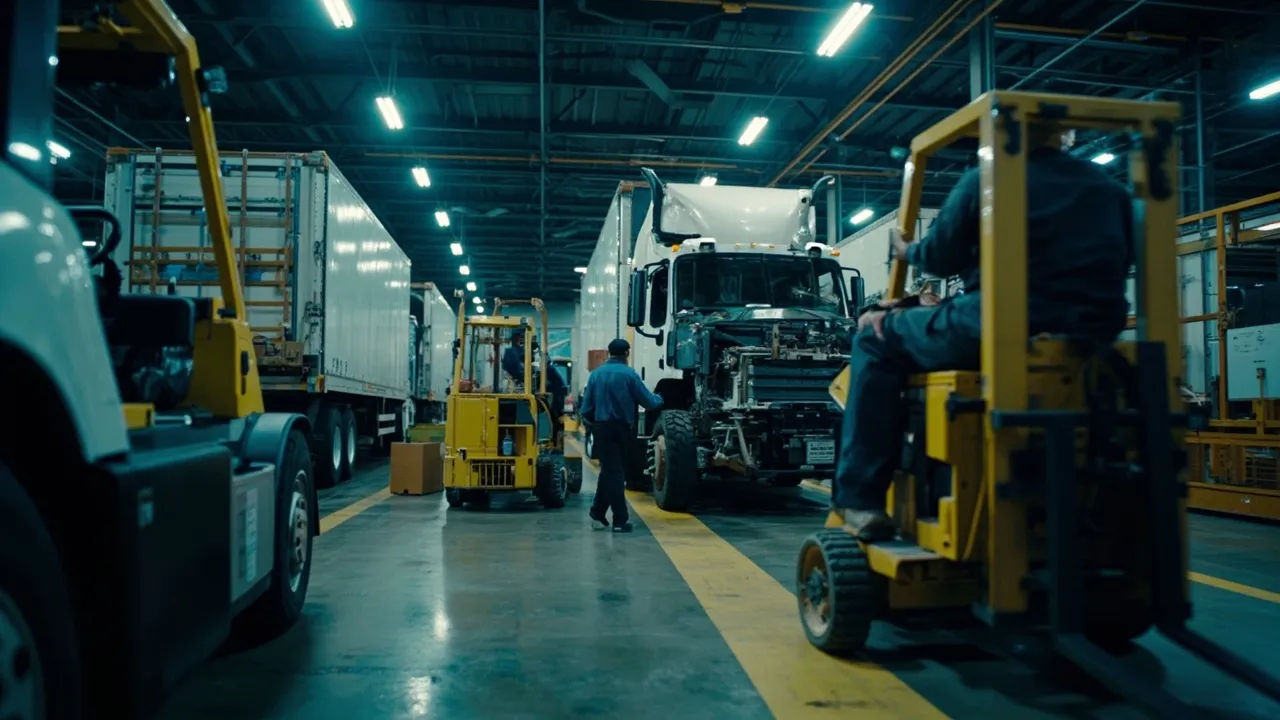
Volvo's experience illustrates why physical and digital readiness must advance together. The Kings Mountain warehouse began without electricity; pallet jacks were used to unload inbound material before power, forklifts, racking, shelving, and scanning arrived. Some pallets contained multiple part numbers or incomplete identification, while packaging sometimes failed Volvo standards and required repacking. A truck arriving early would not solve those receiving constraints.
The cell's shared board must therefore follow material from production release through line-side availability—not merely from pickup through delivery.
Rank Parts by Production Consequence
The right priority is not “oldest order first” or “largest shipment first.” It is the part's production consequence.
A simple hierarchy works:
- Red: confirmed line stoppage or lost build within the next operating horizon.
- Amber: schedule change, substitution, or buffer breach likely without intervention.
- Green: normal service can recover supply before production is affected.
Within each tier, rank by time to impact, units or labor hours exposed, recovery options, and expedite cost. A small carton that preserves an assembly sequence can matter more than a full trailer of noncritical stock.
Require one cause code for every exception—supplier production, quality hold, packaging, documentation, capacity, pickup failure, transit delay, receiving constraint, or inventory discrepancy. The same code should follow the part through the supplier portal, transportation plan, warehouse receipt, and recovery report. That makes repeat failure visible and prevents teams from describing the same event differently.
Govern Premium Freight as a Treatment, Not a Habit
Premium freight is justified when its incremental cost is lower than the production loss it prevents. The recovery cell should document that comparison, the quantity protected, the approving owner, and the next review time for every airfreight, team-driver, dedicated, or out-of-route movement.
This discipline matters because recovery decisions can persist after the original risk disappears. A shipment approved yesterday may no longer need premium service if supplier output improves, plant demand changes, or another load arrives early.
Useful daily measures include parts at risk, hours to shortage, supplier attainment, pickup adherence, ETA confidence, inventory accuracy, premium cost per protected unit, and exceptions by cause. Volvo's team generated inventory reports multiple times per day and published prior-day KPIs by noon, with weekly and monthly summaries. Its measures covered repacking, pallet handling, and inbound and outbound volume—operational facts that exposed bottlenecks while the new site stabilized.
Define the Exit Before the Crisis Ends
A recovery cell should not dissolve because one difficult week feels calmer. Exit criteria should cover three buffers:
- Supply: the supplier meets the agreed production and release plan for a sustained period.
- Transit: all critical shipments have capacity, clean milestones, and stable pickup performance.
- Inventory: plant and warehouse coverage exceeds the risk threshold, with physical and system counts reconciled.
Premium freight should step down in stages. Remove unnecessary air moves first, then dedicated service, while monitoring whether normal routes absorb the volume without rebuilding backlog. Keep cause-code reporting active after the cell closes so the business can verify that the underlying constraint—not just the immediate shortage—was removed.
Volvo's turnaround demonstrates the principle clearly: stabilize flow first, build reliable operating data, then improve layout and capacity as patterns emerge. For manufacturers facing supplier distress, that sequence turns urgent expediting into controlled recovery.
Coordinate Recovery in CXTMS
CXTMS gives logistics teams a shared view of orders, shipments, milestones, exceptions, and carrier execution so recovery decisions can be made from one operating picture. Request a CXTMS demo to see how structured exception workflows and transportation visibility can help your team control inbound risk and premium freight.