Cold Storage Safety Culture Needs Shift-Level Logistics Data

Cold-storage safety is often discussed as a training and compliance issue. It is also a logistics data issue.
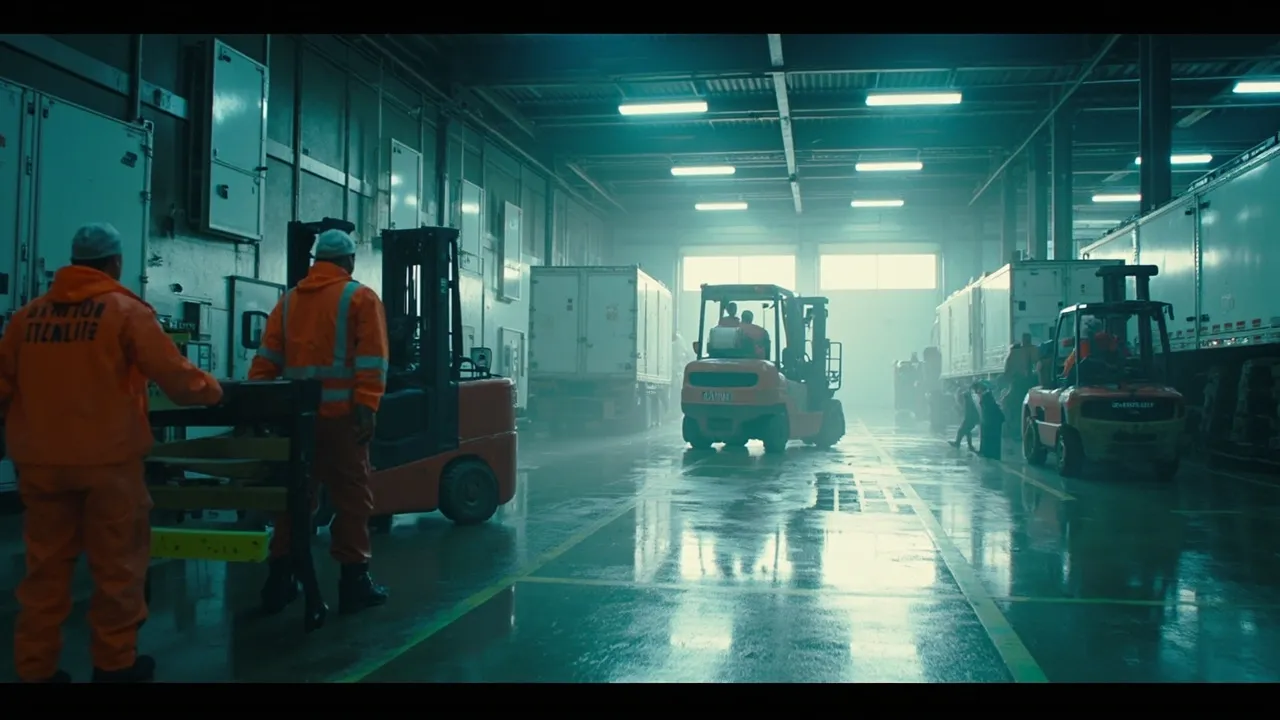
Freezer and refrigerated facilities combine hazards that reinforce one another: low temperatures reduce dexterity, condensation affects floors and equipment, insulated personal protective equipment can restrict movement or visibility, and lift trucks share constrained aisles with pedestrians. Add late inbound freight or appointment bunching, and a routine shift can turn into a race to clear the dock.
A strong safety culture still depends on leadership, worker participation, and consistent procedures. But culture becomes actionable only when managers can see where risk accumulates during the operating day. Monthly incident totals arrive too late and hide too much. Cold-chain operators need shift-level signals connected to workload, labor, equipment, and transportation events.
Why lagging indicators are not enough
Recordable injuries matter, but they describe harm after it occurs. They are also relatively infrequent, which makes them a weak tool for distinguishing a stable shift from one operating close to failure.
The exposure is substantial. Modern Materials Handling reports that OSHA estimates approximately 85 forklift fatalities, 34,900 serious injuries, and 61,800 non-serious injuries each year. Meanwhile, Supply Chain Dive reported that federal regulators launched a warehouse emphasis program because warehousing and distribution workers experience higher nonfatal injury and illness rates than private industry overall.
Those figures support a more proactive operating model. Managers should track the conditions that precede an incident, not wait for an injury rate to move.
Near misses are the clearest starting point. A cold-storage safety article from Food Logistics specifically recommends near-miss reporting processes so companies can address potential problems before an incident occurs. The objective is not to maximize reports indefinitely. It is to make reporting easy, protect workers from blame, identify repeat patterns, and document corrective action.
Build a shift-level safety view
A useful safety view should align all signals to the same facility, zone, date, and shift. At minimum, include:
- Near misses by type and location, including pedestrian interactions, unstable loads, slips, and door strikes.
- Blocked aisles and emergency access points, with the time observed and time cleared.
- Refrigerated door-open duration, which can indicate dock delay, temperature loss, condensation risk, or incomplete staging.
- Lift-truck congestion, travel exceptions, impacts, harsh braking, and equipment fault codes.
- Staffing, absenteeism, overtime hours, temporary labor share, and supervisor coverage.
- Inbound and outbound appointments, actual arrival times, dwell, unload duration, and late-load recovery activity.
- Refrigeration, lighting, floor, dock-plate, battery, and sensor faults, including response time.
These metrics should not become a surveillance scoreboard used to punish individuals. That destroys reporting quality. The unit of analysis should be the process: a zone, workflow, appointment pattern, equipment class, or time window. Managers need enough detail to find causes without creating an incentive to conceal weak signals.
Connect transportation variability to warehouse risk
Warehouse and transportation teams often review performance separately. That separation misses a common cold-chain failure mode.
Suppose three refrigerated trailers scheduled across a three-hour window arrive within 25 minutes. The facility may have the right daily labor plan and enough total dock capacity, yet the actual arrival pattern produces a short, intense congestion event. Pallets accumulate in staging, freezer doors stay open, lift-truck routes overlap, and employees rush to protect temperature-sensitive freight and release waiting drivers.
The safety report may later show a near miss in an aisle. The transportation report may show two late arrivals. Neither explains the system unless the records share timestamps and identifiers.
Join appointment data to gate arrival, dock assignment, unload start and finish, door-open time, staging occupancy, labor hours, equipment alerts, near misses, and incidents. Then ask practical questions: Do pedestrian conflicts rise when arrivals exceed planned dock capacity? Does overtime coincide with more harsh-braking events? Are blocked aisles concentrated after late inbound loads? Do equipment faults remain open longer on understaffed shifts?
This is where a transportation management system can support warehouse safety without pretending to replace a safety management system. Reliable appointment, shipment, carrier, stop, and exception data supplies the transportation context that incident records lack.
Run one joint review, not two isolated meetings
A weekly warehouse-transport review should examine the previous seven days by shift. Keep the agenda operational:
- Identify the highest-risk shift or zone using leading indicators.
- Reconstruct the workload and appointment sequence around the event.
- Separate immediate behavior from system causes such as bunching, poor staging, insufficient labor, or slow equipment repair.
- Assign one corrective action, owner, and due date.
- Check whether the same indicator improves over the next several comparable shifts.
The review should also recognize positive reporting. A rise in near-miss submissions after a reporting campaign can signal greater trust, not worsening safety. Pair report counts with closure time, repeat-event frequency, and corrective-action completion to understand whether the organization is learning.
Make safety visible at operating speed
Cold-storage safety culture is expressed in thousands of small decisions: whether a worker reports a slick floor, whether a supervisor pauses a congested lane, and whether dispatch reschedules a late load instead of forcing it into an overloaded window. Shift-level data makes those decisions visible while there is still time to intervene.
CXTMS helps logistics teams connect appointments, shipment milestones, dwell, carrier performance, and exceptions so warehouse and transportation leaders can review the same operating picture. Request a CXTMS demo to see how better logistics data can support safer, more controlled cold-chain operations.