Smart Conveyor Motors Turn Warehouse Maintenance Into a Shipment-Risk Signal

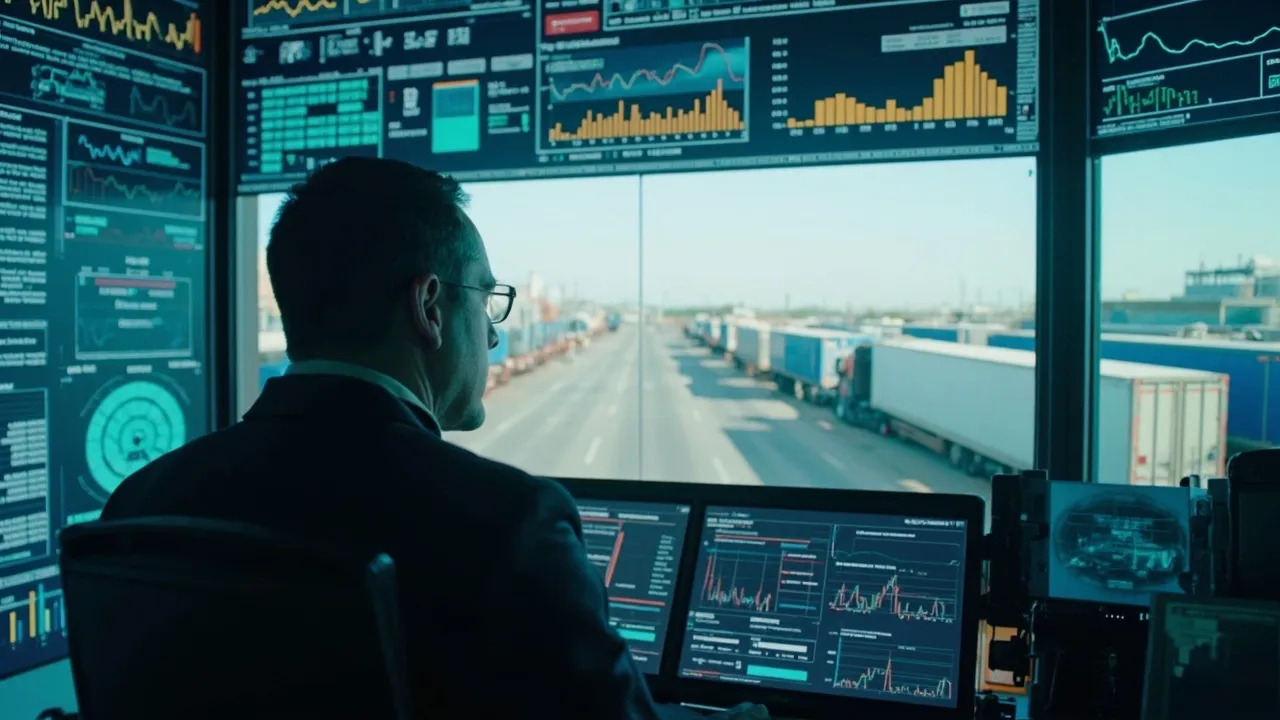
A conveyor motor warning is not merely a maintenance ticket. In a high-throughput distribution center, it can be the first indication that orders will miss sortation, trailers will leave partly loaded, or a carrier appointment will need to move. Yet many warehouses still separate equipment condition from shipment execution: technicians see motor alarms while transportation teams see only a growing backlog.
Smart motors and connected drives can close that gap. By exposing load, temperature, vibration, energy use, run time, and fault codes, they make mechanical deterioration visible before a conveyor stops. The operational payoff comes when those readings are translated into threatened zone capacity, orders, cutoffs, and outbound commitments—not when they remain on a maintenance dashboard.
A motor can be an early logistics sensor
Legacy conveyor drives often run continuously and provide little information beyond on, off, or fault. Maintenance teams compensate with fixed inspection schedules, operator observations, and replacement after failure. That approach can keep a simple line moving, but it does not distinguish a lightly loaded spur from a motor supporting the only path into a high-volume shipping sorter.
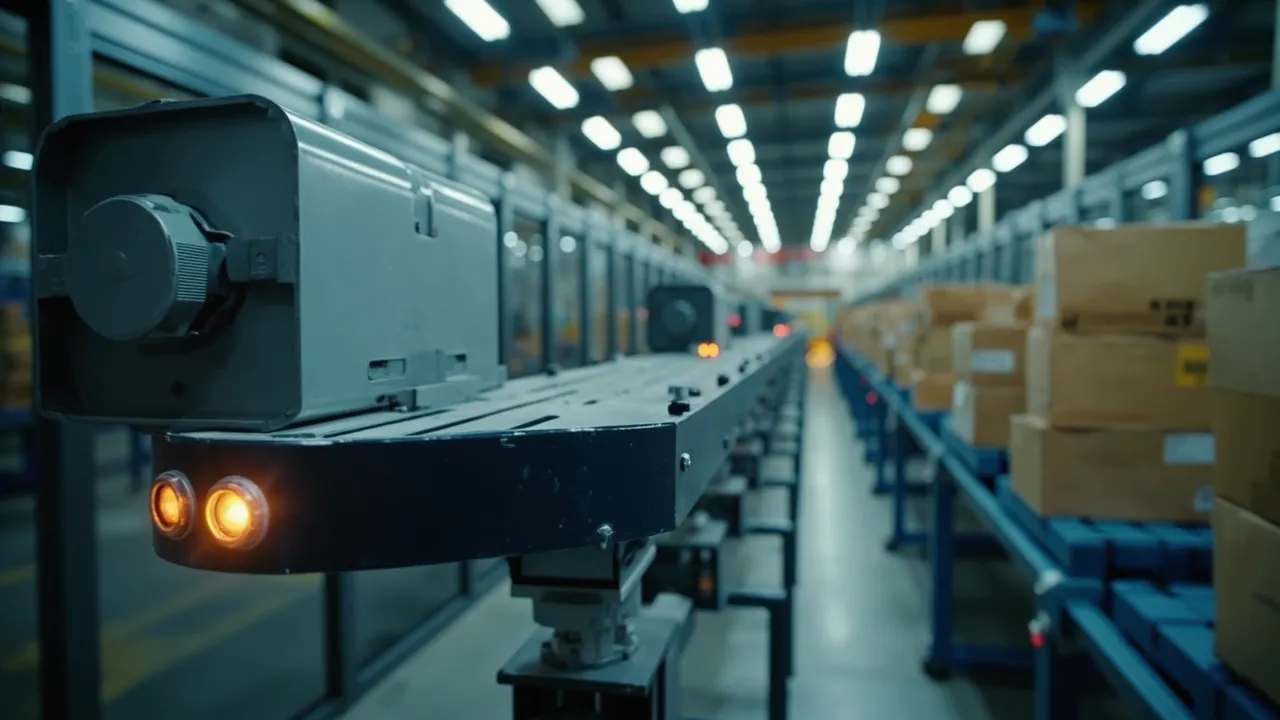
Modern Materials Handling reports that motors and power-transmission systems are becoming more connected through advanced controls, condition monitoring, and AI. The article also highlights drum motors whose drive components are enclosed inside the drum, eliminating external motors, gearboxes, chains, sprockets, and couplings that otherwise require routine attention.
The broader investment signal is substantial. A separate Modern Materials Handling report projects the smart conveyor systems market will reach $27.8 billion by 2035. It attributes growth partly to e-commerce and omnichannel demand for faster fulfillment, while identifying real-time monitoring, fault detection, and automated maintenance scheduling as important capabilities.
Those technologies produce useful signals, but a raw signal is not yet a business decision. A temperature increase could justify observation, a planned repair, or immediate load shedding. The correct response depends on how quickly the condition is changing and what shipments depend on that motor.
Connect condition to capacity and commitments
Every critical motor should have an operational dependency map. Identify the conveyor zone it powers, the normal and degraded throughput of that zone, available bypasses, the order profiles routed through it, and the labor needed to operate a contingency path. Then connect the zone to wave schedules, parcel induction deadlines, truck loading plans, and carrier appointments.
This turns an engineering alert into a shipment-risk calculation. Suppose a motor on the primary outbound merge normally supports 3,000 cartons per hour. If rising heat requires the line to run at 70% capacity, the meaningful question is not whether the motor remains online. It is whether the resulting 900-carton hourly capacity loss will push the backlog beyond the 5:30 p.m. parcel cutoff or delay loading for a 6 p.m. truck appointment.
The calculation should include current work in queue, forecast releases, remaining productive minutes, alternate-route capacity, and labor availability. It should also identify the affected orders by service level and promised date. Maintenance can then schedule a controlled intervention while operations protects urgent orders, instead of both teams discovering the consequences after a shutdown.
Retrofit by throughput dependency, not age
Replacing the oldest motors first is easy to explain but often misallocates capital. Age is only one risk factor. A newer motor with frequent overloads on a single-point-of-failure merge may deserve monitoring before an older unit on a redundant, low-volume takeaway line.
Score retrofit candidates across five dimensions: failure history, criticality to flow, availability of a bypass, time to repair, and shipment exposure during the repair window. Add energy intensity where connected controls can reduce unnecessary continuous running. The highest priority belongs to assets where an unplanned failure creates a large and rapidly growing backlog with no practical recovery route.
Begin with a bounded pilot covering several different operating profiles: a critical merge, a high-cycle accumulation zone, and a lower-risk conveyor with redundancy. Establish baseline measurements for faults, maintenance labor, downtime minutes, energy consumption, zone throughput, and orders delayed. Condition thresholds should be tested against real operating states because heat or current draw under peak load may be normal, while the same reading during light flow may signal deterioration.
The pilot should prove detection quality as well as economics. Too many false alarms train teams to ignore warnings. Too few warnings merely digitize reactive maintenance. Review which readings preceded actual defects, how much intervention time they created, and whether that time was enough to preserve outbound service.
Put warnings into WMS and TMS workflows
A maintenance platform or warehouse control system can identify an abnormal motor. The warehouse management system knows which orders are queued for the affected zone. The transportation management system knows their shipment cutoffs, appointments, and customer commitments. Useful prediction requires these systems to exchange events.
Create severity levels tied to explicit action. An advisory can open a work order and increase observation. A capacity-risk warning can reduce release volume into the zone, redirect eligible cartons, and reserve labor for manual handling. A probable-failure alert can pause new waves, prioritize orders approaching cutoff, notify transportation planners, and propose appointment changes before carriers arrive.
Each exception needs a named owner, timestamp, affected asset, expected capacity loss, impacted orders and loads, next decision time, and recovery estimate. When the motor returns to normal, the workflow should reconcile stranded work and confirm that every threatened shipment has a new plan. Closing the maintenance ticket alone is insufficient if late orders remain in the building.
Measure service protected, not alerts generated
The strongest program metrics connect asset health to customer outcomes. Track detected faults that led to planned intervention, unplanned downtime minutes, mean time to repair, and false-alert rate. Pair them with cartons deferred, orders protected before cutoff, appointments changed with adequate notice, premium freight avoided, and on-time shipment performance.
Warehouse teams should also measure recovery. A 20-minute conveyor stop can create hours of congestion if accumulation lanes fill, labor shifts to manual moves, and the sorter receives a surge after restart. Compare time to mechanical restoration with time to normal backlog and shipment flow. That difference reveals the operational tail of downtime.
Smart conveyor motors are valuable because they buy decision time. When equipment telemetry is connected to warehouse queues and transportation commitments, maintenance stops being an isolated response to machinery. It becomes a predictive control for shipment reliability.
CXTMS links warehouse exceptions with orders, loads, carrier appointments, and delivery commitments so teams can act before equipment risk becomes a service failure. Request a CXTMS demo to turn operational warnings into earlier, better transportation decisions.