Trimac's California Freight Deal Needs Food-Grade Tanker Chain-of-Custody Integration

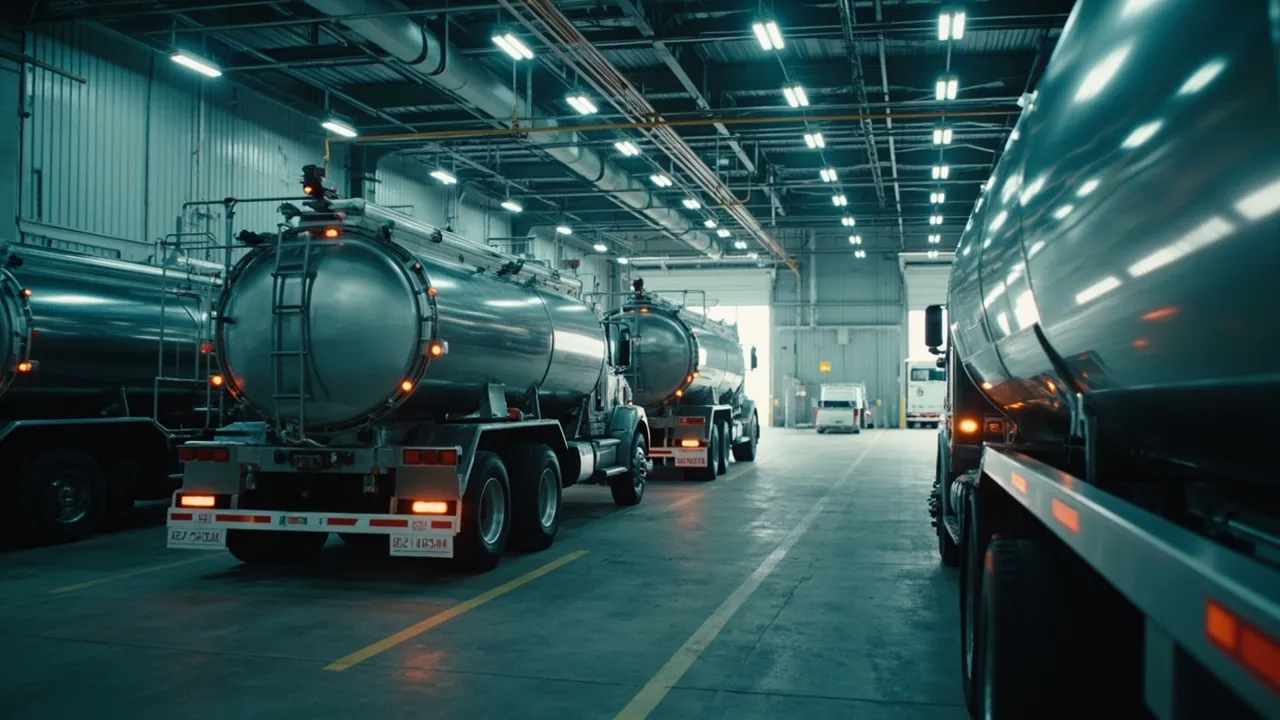
Trimac Transportation's acquisition of California Freight is not a routine fleet expansion. It combines specialized food-grade assets, people, facilities, and operating records in a business where a missing wash certificate or incompatible prior load can sideline a tanker—and potentially expose a food customer to contamination risk.
FreightWaves reports that California Freight has served dairy and agricultural shippers for nearly 37 years. The transaction adds approximately 500 tractors, food-grade tank trailers, eight terminals, a warehouse, and a brokerage office across California and Nevada. Those numbers create network density, but they also multiply the master-data and chain-of-custody decisions that must be correct before cross-dispatching begins.
The integration milestone that matters first is therefore not a common logo, portal, or dispatch screen. It is a single, auditable answer to five questions for every load: What was hauled previously? Was the equipment cleaned to the customer's standard? Who inspected and sealed it? Did the product remain within specification? Can the evidence be retrieved immediately?
Build a food-grade control layer before combining capacity
A stainless-steel tanker cannot be treated as interchangeable capacity merely because its volume and configuration fit the order. Product restrictions may depend on the last load, several prior loads, allergen class, kosher or customer rules, wash method, valve and hose configuration, and time since cleaning. Those constraints need structured fields and dispatch blocks—not notes that a planner must remember to open.
Create a digital equipment passport for every trailer. At minimum, it should connect:
- trailer identity, compartment configuration, fittings, pumps, hoses, and dedicated-product status;
- the previous-load sequence, commodity classification, allergen attributes, and customer restrictions;
- wash location, wash type, completion time, certificate number, and supporting document;
- inspection results, seal numbers, exceptions, corrective actions, and release authority;
- loading, transit, and delivery temperature requirements where applicable.
Food Logistics' review of FSMA sanitary transportation compliance notes that carriers, loaders, and receivers must implement written shipper requirements and retain those records for one year. Another Food Logistics overview identifies truck and trailer washing requirements alongside equipment sanitation and employee food-safety training. Integration should preserve those obligations as enforceable workflows, not just archived PDFs.
Reconcile master data before cross-dispatch
The acquired operation will bring its own identifiers for drivers, tractors, trailers, customers, farms, processing plants, wash sites, commodities, and routes. Similar names do not prove that records represent the same entity. A dairy facility may have separate receiving points, appointment rules, sanitation requirements, and billing accounts under one street address.
Start with authoritative identifiers and a cross-reference table between legacy and target systems. Validate trailer numbers against registration and maintenance records; validate drivers against credentials and food-safety training; and have account owners approve customer and facility matches. Keep the legacy identifiers searchable so dispatchers and customers can trace historical loads during the transition.
Commodity data deserves its own governance. Normalize product names into controlled categories and attach allergen, temperature, prior-load, wash, and equipment rules to those categories. If one system calls a product “cream,” another “dairy liquid,” and a third uses a customer code, a simple text match can create a dangerous false equivalence.
Only release an asset into the combined dispatch pool when its passport, restrictions, maintenance state, and operating location have passed validation. Until then, keep it visible but blocked. That preserves planning awareness without allowing an optimistic dispatcher to assign uncertified capacity.
Make the chain of custody event-driven
Food-grade evidence is strongest when captured at the operational event, not reconstructed after delivery. A wash completion should attach the certificate and update eligibility. A loading inspection should record the person, timestamp, cleanliness result, product temperature, and initial seal. Seal changes should require a reason and responsible party. Delivery should capture the receiving result, final seal, temperature where required, and any rejection or quality exception.
Use hard stops for missing or incompatible information. The TMS should prevent tender acceptance or dispatch when:
- required prior-load history is incomplete;
- the wash certificate is absent, expired, or from an unapproved facility;
- a commodity conflicts with an allergen or customer-specific restriction;
- equipment, driver training, or inspection status is invalid;
- required temperature or seal fields are missing.
Exceptions should route to a named food-safety or operations owner with a reason code, supporting evidence, and approval trail. An override without an owner merely converts a data problem into an unmeasured risk.
Measure safety and network value together
Acquisition reporting often emphasizes revenue, tractor count, or load volume. Those measures can hide whether integration is improving the operation. Use a balanced scorecard that connects food safety, service, and asset economics.
Track the percentage of loads with complete prior-load, wash, inspection, seal, and temperature evidence; dispatch blocks by cause; wash-related dwell; rejected loads; and contamination or allergen exceptions. Pair those controls with on-time pickup and delivery, empty miles, loaded miles per tractor, trailer turns, wash-to-load cycle time, terminal dwell, and asset utilization.
Segment the results by terminal, commodity, customer, and legacy fleet. If empty miles fall while wash exceptions rise, the network is optimizing the wrong constraint. If utilization remains flat because compatible clean equipment is stranded at another terminal, planners need better repositioning signals—not weaker sanitation rules.
A 30-, 60-, and 90-day integration cadence works well. First establish trustworthy masters and evidence completeness. Then introduce controlled cross-dispatching on low-complexity lanes. Finally, optimize terminal coverage and equipment positioning using only validated capacity. Each expansion should have explicit safety and service thresholds with a rollback plan.
Trimac's enlarged western food-grade network has real potential: more terminals, more specialized equipment, and more options for dairy and agricultural customers. Capturing that value depends on treating chain of custody as operational data from day one. CXTMS brings orders, equipment eligibility, compliance documents, dispatch controls, milestones, and performance measures into one governed transportation workflow. Request a CXTMS demo to see how a TMS can support disciplined carrier and fleet integration without losing control of the load-level details.