FedEx and Dexterity Move Autonomous Trailer Loading From Demo to Acceptance Test

Moving a trailer-loading robot from a controlled pilot to a busy parcel hub changes the question. The issue is no longer whether the machine can stack boxes. It is whether the complete operation can meet a repeatable service standard across mixed freight, imperfect trailers, peak volume, and human intervention.
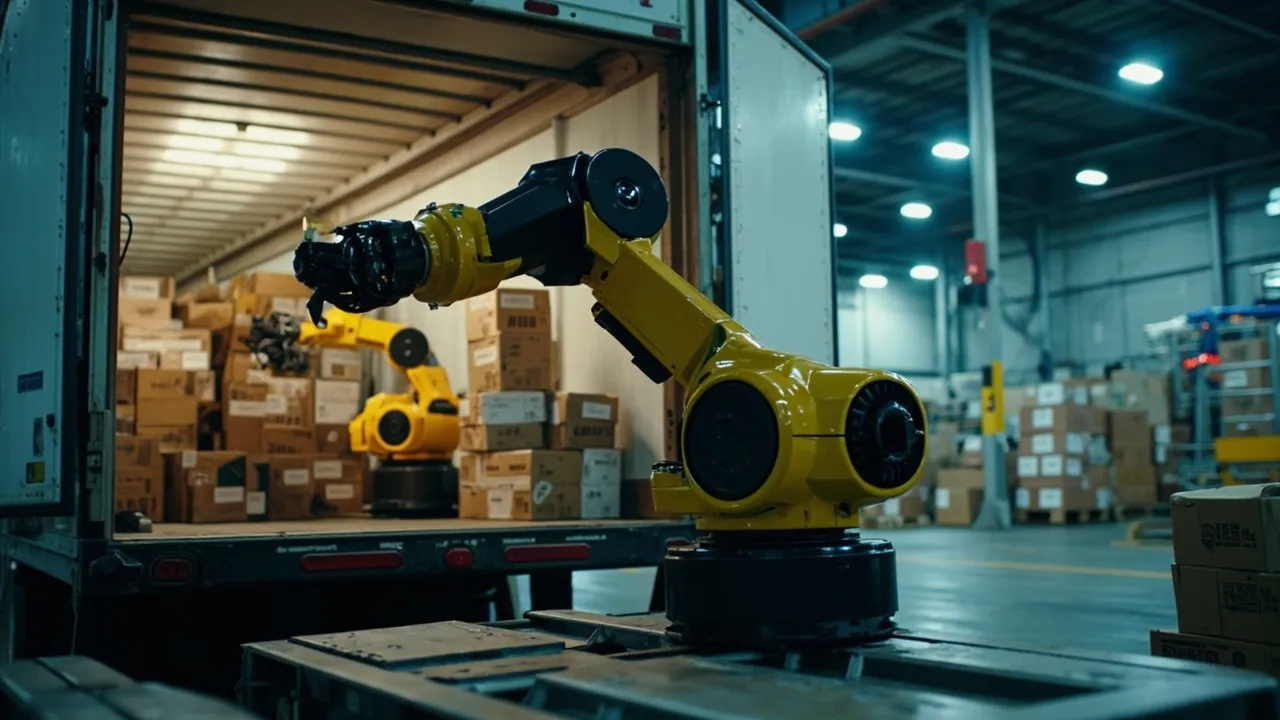
FedEx is now making that transition with Dexterity at its Hagerstown, Maryland, hub. The deployment follows several years of joint development and testing and expands the technology into a busier operation. For logistics leaders, Hagerstown should be viewed as a site acceptance test: a production environment in which throughput, quality, safety, and recovery must all work together.
A busier hub exposes the real operating envelope
Logistics Management reports that FedEx loads tens of thousands of trailers each day across its network. It also notes that the companies have not disclosed the number of robots planned for Hagerstown or a timetable for a broader rollout. That makes the expansion meaningful without turning it into proof of network-wide readiness.
Trailer loading is difficult to automate because parcels vary in size, shape, weight, rigidity, and surface condition. The available space changes after every placement. Packages arrive in an imposed sequence, while trailer floors, walls, lighting, and alignment are not perfectly uniform. Dexterity's compact Mech robot uses two arms, while its Foresight system combines sight, depth sensing, and touch to make loading decisions in real time.
Those capabilities can establish technical feasibility. Production acceptance requires evidence that they remain effective throughout an operating shift. A robot that performs well on clean cartons at an even induction rate may behave differently when soft packages, damaged boxes, irregular items, conveyor gaps, and sudden surges appear together.
Define acceptance before measuring performance
An acceptance scorecard should cover five linked outcomes.
Load rate: Measure packages loaded per hour, but report the distribution rather than only an average. Break results down by trailer type, parcel mix, induction rate, hour of shift, and number of interventions. A high mean can conceal long stoppages that delay departures.
Cube utilization: Record the usable trailer volume filled, not simply package count. Poor wall construction, avoidable gaps, or unstable stacks can send a trailer out early and create another linehaul move. Compare the robot's result with the site's established loading method on equivalent freight profiles.
Damage and load quality: Track damage found during loading, at unload, and at the next sort point. Include fallen walls, crushed cartons, unstable placements, and packages requiring rework. Quality needs a downstream observation window; a load can look acceptable when the door closes and still fail in transit.
Exception recovery: Count jams, dropped parcels, unreadable objects, rejected items, sensor faults, and human entries into the work area. Measure both mean time to recover and the tail of the recovery-time distribution. The critical test is not whether exceptions occur, but whether the operation identifies, contains, and clears them predictably.
Safe human handoff: Define who can pause the cell, secure stored energy, enter the trailer, remove an exception, verify readiness, and restart it. Every handoff should generate a timestamp and reason code. Safety cannot be traded for load rate during a late dispatch window.
A successful pilot is not a scalable operating standard
Scaling adds variability in three directions. Freight variability introduces different carton mixes and arrival patterns. Asset variability introduces trailers with different dimensions, floor conditions, wall damage, and dock alignment. Demand variability introduces peaks, staffing changes, and pressure from scheduled departures.
This is why a pilot pass should not become a blanket approval. Create an operating envelope that specifies parcel dimensions and weights, trailer types, induction ranges, staffing assumptions, and environmental conditions already validated. Anything outside that envelope should remain an exception or enter a controlled test queue.
The broader warehouse lesson is well established. Inbound Logistics identifies workforce resilience, operational flexibility, automation readiness, and performance management as four connected capabilities of high-performing operations. It cites a warehouse automation market projected to reach $51 billion by 2030, while warning that buying technology and realizing value are different challenges. It also reports that performance-based operating models can lower operating costs by as much as 25% while maintaining safety, service, and control.
Those figures are not promised returns for trailer-loading robots. They explain why deployment discipline matters. Hardware alone does not create an operating result; trained responders, maintenance coverage, exception rules, performance ownership, and system integration do.
Connect robot events to departure readiness
Trailer automation becomes operationally valuable when its events reach transportation execution. A robot controller may know that a load is 82% complete, but the transportation team needs to know whether the trailer can make its planned departure, what freight remains, and whether intervention threatens the cutoff.
Create one trailer-level record linking the dock door, equipment ID, route, planned close time, load progress, cube estimate, exception status, and final release. Stream milestone events such as loading started, loading paused, human intervention requested, loading resumed, quality hold applied, and loading complete.
Then apply decision rules. If the robot's estimated completion moves beyond the cutoff, CXTMS can alert dock and transportation supervisors. If a quality hold remains open, the trailer should not be marked departure-ready merely because loading stopped. If an exception removes packages from the planned load, the shipment record should identify what was shorted and launch recovery work before the trailer reaches the next hub.
The same record supports a clean acceptance review. Leaders can compare robot performance with departure punctuality, trailer utilization, damage claims, labor interventions, and downstream rework. That prevents a narrow robotics metric from masking a worse transportation outcome.
Hagerstown is an important step precisely because it raises the standard of evidence. The winning question is not, “Did the robot load a trailer?” It is, “Did the integrated operation produce safe, stable, on-time departures across the full range of conditions it was approved to handle?”
Build automation events into transportation decisions. Request a CXTMS demo to see how trailer milestones, exceptions, and departure readiness can live in one operating workflow.