A $20 Million Trailer Seizure Shows Why Cargo-Security Data Must Follow the Equipment

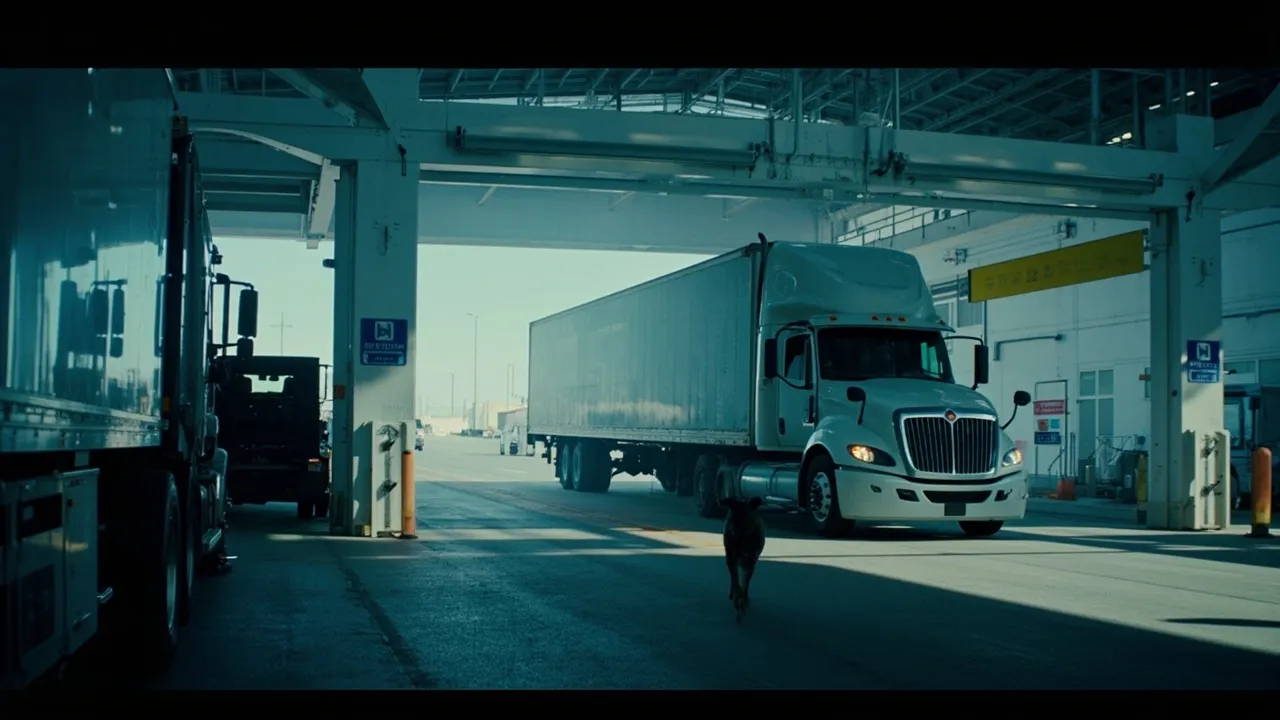
A driver can pass every identity check and still arrive at the border with a compromised trailer. That is the operational lesson from a recent cocaine seizure at California's Calexico Port of Entry: security controls must follow the equipment through its entire chain of custody.
U.S. Customs and Border Protection officers referred a commercial tractor-trailer for additional screening after an X-ray inspection. A canine team then alerted to the trailer, and officers discovered packages concealed beneath its floorboards. FreightWaves reported that officers recovered 366 packages containing 910 pounds of cocaine, with an estimated value above $20 million.
The seizure is dramatic, but the control failure it illustrates is ordinary: a transportation record may identify the shipment, carrier, and driver while saying little about the physical unit carrying the freight.
Driver vetting cannot validate a trailer's structure
Carrier qualification and driver verification remain essential. They reduce impersonation, unauthorized pickup, and fraudulent tender acceptance. But neither control proves that the trailer presented at pickup is the same trailer inspected earlier, nor that its structure remained unchanged.
Hidden floor compartments sit outside the usual driver-screening workflow. So do equipment swaps, cloned unit numbers, substituted license plates, altered doors, and seal replacements. A driver may not know that a trailer was modified before it entered the carrier's possession. Conversely, an approved driver could participate in a swap after dispatch. The point is not to presume guilt; it is to avoid treating a person-level check as an equipment-level assurance.
The wider threat environment makes that distinction important. Inbound Logistics reported that cargo theft rose 33% in the second quarter of 2024 compared with the same quarter a year earlier. The publication also cited a rise of more than 600% from November 2022 through March 2023. Those figures cover theft and fraud beyond concealed contraband, but they show how quickly organized adversaries adapt when transportation controls leave gaps.
Give every trailer a persistent security identity
A trailer should have a durable master record independent of its current tractor, driver, shipment, or carrier assignment. The identifier might combine the carrier's equipment number, VIN, license plate, jurisdiction, and telematics device ID. Any mismatch should trigger review rather than silently creating another record.
That master should accumulate evidence over time:
- inspection date, location, inspector, method, checklist, photographs, and result;
- known dimensions, tare weight, floor configuration, repair history, and structural modifications;
- seal number, seal type, issuer, application time, removal time, and removal reason;
- tractor coupling and uncoupling events, assigned driver, facility gate events, and geofence history;
- X-ray, canine, customs, or law-enforcement referrals and their disposition;
- custody transfers with the releasing and accepting parties' acknowledgements.
This does not require every shipper to store sensitive inspection imagery indefinitely. It does require a tamper-evident record that an inspection occurred, which equipment was examined, who held custody afterward, and whether the unit changed before its next controlled milestone.
Inbound Logistics notes that integrated trailer data can show reconnection, movement, door opening, or cargo removal. When that telemetry is linked to driver identity, it produces a stronger chain of custody for both security investigations and freight claims.
Treat seals as events, not static text
A seal number typed into a free-text dispatch note is weak evidence. It may be mistyped, copied from an earlier load, or overwritten without a record of who changed it. Seal control becomes useful when each action is a timestamped event attached to the trailer and shipment.
At origin, capture the seal number and a photograph after loading. At every authorized opening, record the reason, location, actor, old seal, and replacement seal. Compare gate-camera evidence and mobile scans with the expected sequence. If a trailer reaches a border or consignee with an unexplained seal change, the TMS should stop release automatically.
The same principle applies to equipment swaps. Dispatchers sometimes substitute a trailer to keep freight moving. Operationally, that can be sensible. From a security perspective, however, the replacement creates a new risk assessment. Inspection status, seal history, route permissions, and custody evidence must transfer only after the new equipment is verified—not because someone edited a unit number in a note.
Convert border exceptions into auditable holds
Border operations generate exceptions under time pressure. A scan referral, seal discrepancy, unexplained dwell, route deviation, weight variance, or structural anomaly can easily become a phone call followed by a vague comment. That approach makes it difficult to prevent release, reconstruct decisions, or identify repeated patterns.
CXTMS can model each exception as a structured hold with:
- a reason code and severity level;
- the trailer, tractor, shipment, driver, carrier, and facility involved;
- supporting documents, images, sensor events, and inspection references;
- the required reviewer and release conditions;
- timestamps for creation, escalation, acknowledgement, and resolution;
- an immutable record of who authorized the next movement.
Rules should be explicit. A high-risk X-ray referral can block dispatch until customs clears the unit. A seal mismatch can require photographs and supervisor approval. A trailer identifier mismatch can force a VIN or plate verification. An unexpected coupling event near the border can trigger a geofence alert and a new physical inspection.
These controls also improve analytics. Security teams can compare anomaly rates by equipment, yard, lane, carrier, repair vendor, and custody handoff. Repeated floor repairs or recurring seal discrepancies on the same trailer become visible even when the loads and drivers differ.
Make the equipment record the common thread
The Calexico seizure succeeded because inspection tools found what a routine record could not: hundreds of packages hidden inside the trailer itself. Transportation systems should learn from that physical reality.
Vetting people is necessary. Tracking shipments is necessary. Neither replaces persistent equipment identity, structured custody events, and enforceable exception holds. When inspection, seal, telemetry, repair, and border records follow the trailer, operators can detect mismatches earlier and explain every release decision later.
CXTMS connects equipment identity, shipment execution, documents, milestones, exceptions, and approvals in one auditable workflow. To build stronger cross-border controls without burying dispatchers in disconnected notes, request a CXTMS demo.