Predictive Food Waste Models Need a Store-to-Replenishment Feedback Loop

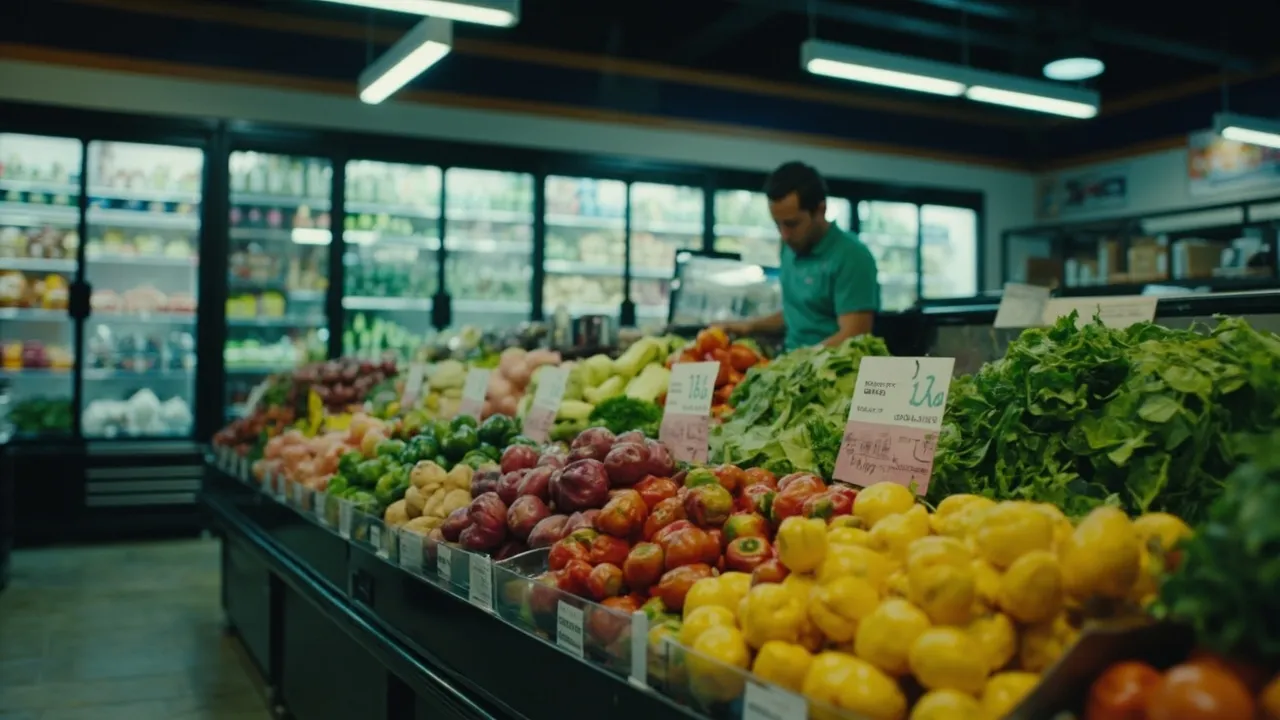
Food waste analytics can identify tomorrow's spoilage with impressive precision. But prediction alone does not save a case of berries, prevent an unnecessary bakery delivery, or correct an oversized deli order. To change those outcomes, the insight must travel upstream from the store into replenishment and transportation planning before the next commitment is made.
That distinction matters at grocery scale. Food Logistics reports that roughly 30% of food at grocery stores goes unsold each year, contributing to an estimated 16 billion pounds of retail food waste. A better waste dashboard may explain that loss more clearly. A closed feedback loop can prevent part of it.
Waste risk starts with connected store signals
Short-shelf-life categories rarely fail for one reason. Produce may deteriorate after a warm receiving event. Deli demand may drop after a weather change. A bakery promotion may lift sales at one location while generating leftovers at another. Online substitutions can make recorded demand look lower than the demand customers actually expressed.
A useful predictive model therefore needs more than point-of-sale history. Its inputs should include:
- On-hand quantity by item, lot, and expiration or sell-by date
- Markdowns, disposals, donations, and spoilage reason codes
- Online substitutions, abandoned demand, and stockouts
- Promotions, holidays, local events, and weather
- Receiving times, delivery temperatures, and remaining shelf life
- Supplier lead times, order cutoffs, and case-pack constraints
This is consistent with Food Logistics' account of connected store data: AI can combine demand patterns, delivery data, and historical product performance to identify items likely to become waste. Dynamic markdown models can then recommend a price for a specific item, store, and day to improve sell-through.
Markdown optimization is useful, but it treats inventory that has already arrived. The larger opportunity is to feed the result into the next order.
Close the loop before the order cutoff
Imagine a model flags excess strawberries at 9 a.m. The store's next produce order closes at noon. The system has three hours to translate that signal into action: reduce tomorrow's quantity, redirect supply to a nearby store, adjust a promotion, or postpone a delivery. If the same recommendation arrives at 1 p.m., it may still improve a dashboard, but it cannot change the committed shipment.
That makes feedback latency a core operating metric. It should measure elapsed time from a meaningful store event—sale, markdown, spoilage, substitution, temperature exception, or inventory correction—to an updated replenishment recommendation. Teams should compare that latency with the remaining time before the relevant order and dispatch cutoffs.
A practical service-level measure is the percentage of waste-risk signals incorporated before the next order lock. That percentage is more revealing than the number of predictions generated. It tells operators whether the model is connected to a decision window.
The second essential metric is forecast bias by shelf-life cohort. Aggregate forecast accuracy can hide systematic over-ordering. Planners should calculate signed error separately for items with one day, two to three days, and longer remaining life, then segment it by store, weekday, promotion state, and supplier. Persistent positive bias in a two-day-life cohort signals that the network repeatedly sends more product than stores can sell while it is viable.
Connect store learning to transportation
Replenishment changes affect freight execution. A reduced order may eliminate a pallet position but not a stop. A transfer between stores may save product while adding handling and route miles. A late supplier delivery may consume so much remaining shelf life that accepting the shipment creates more waste than shorting the order.
Transportation data must therefore join the loop. The model needs planned and actual arrival times, stop sequence, dwell, temperature exceptions, rejected quantities, and proof-of-delivery events. The transportation management system can then evaluate whether a replenishment response is operationally feasible rather than merely mathematically attractive.
This becomes more important as temperature-controlled networks expand. Food Logistics cites 7.76 billion cubic feet of space among the global top 25 temperature-controlled operators in 2026, up 6.3% from 2025. More capacity does not automatically produce fresher inventory. Without item, lot, and delivery-event visibility, a larger cold chain can simply move excess product more efficiently.
Build one operational record
The closed loop should create a traceable record for every intervention:
- What store signal changed the waste forecast?
- Which lot and shelf-life window were affected?
- What replenishment recommendation changed?
- Was the order updated before cutoff?
- Did the transport plan change?
- What happened to sell-through, markdown, and spoilage?
That record allows the model to learn from outcomes instead of repeatedly issuing the same recommendation. It also separates avoidable waste from events the network could not control. A weather-driven demand drop may be unpredictable at long range, but a recurring two-hour receiving delay is an operational pattern that should change future ordering or routing.
Governance matters, too. Automatic quantity reductions should stay within agreed tolerances; larger changes may require planner approval. Stores need a simple way to report bad inventory counts or unusual local events. Suppliers and carriers need consistent event definitions. Otherwise, the model will optimize against incomplete or contradictory signals.
Move from prediction to prevention
The best food waste system is not the one that produces the most alerts. It is the one that changes a decision early enough to prevent excess inventory while protecting availability. That requires store data, replenishment logic, lot-level shelf life, and transportation events to operate as one feedback loop.
CXTMS helps logistics teams connect orders, delivery milestones, exceptions, and execution data so operational signals can reach planners while there is still time to act. Request a CXTMS demo to see how a connected transportation workflow can support fresher inventory and more responsive replenishment.