Saronic's $3B Brownsville Shipyard Makes Defense Logistics a Port-Readiness Test

Defense manufacturing capacity is often discussed as a national industrial priority. On the ground, it starts as a logistics test.
FreightWaves reported that autonomous maritime technology company Saronic selected the Port of Brownsville, Texas, for Port Alpha, a planned $3 billion-plus next-generation shipyard. The company says the project could create up to 10,000 jobs in South Texas and become one of the largest private U.S. shipbuilding investments in decades.
The headline is shipbuilding. The operating reality is project freight: steel, heavy equipment, electrical systems, precision electronics, cranes, security infrastructure, construction materials, temporary facilities, workforce staging, permits, laydown yards, and port access all have to arrive in the right sequence before a software-defined shipyard can produce anything.
That is why Brownsville matters beyond one company. It shows how defense industrial growth turns ports into readiness platforms. The port is not just where finished vessels may eventually touch water. It is where inbound industrial capacity has to be received, staged, inspected, protected, and synchronized against construction milestones.
The Port Is Part Of The Factory
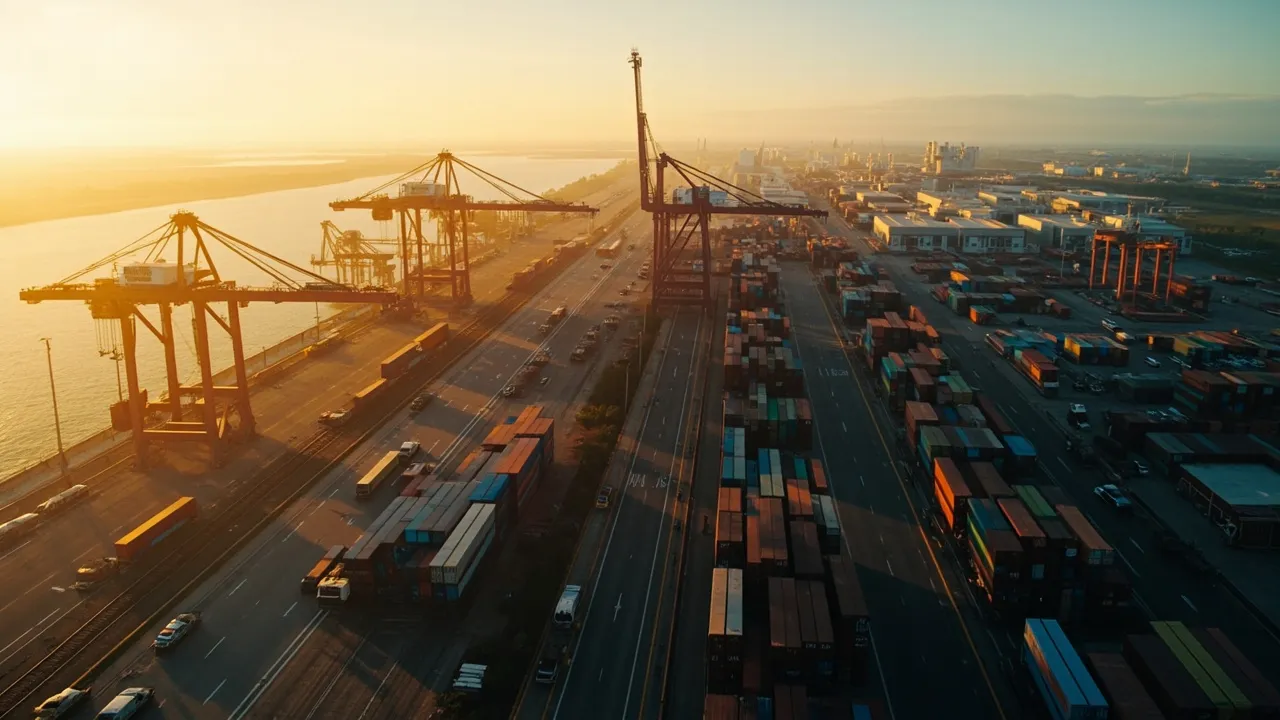
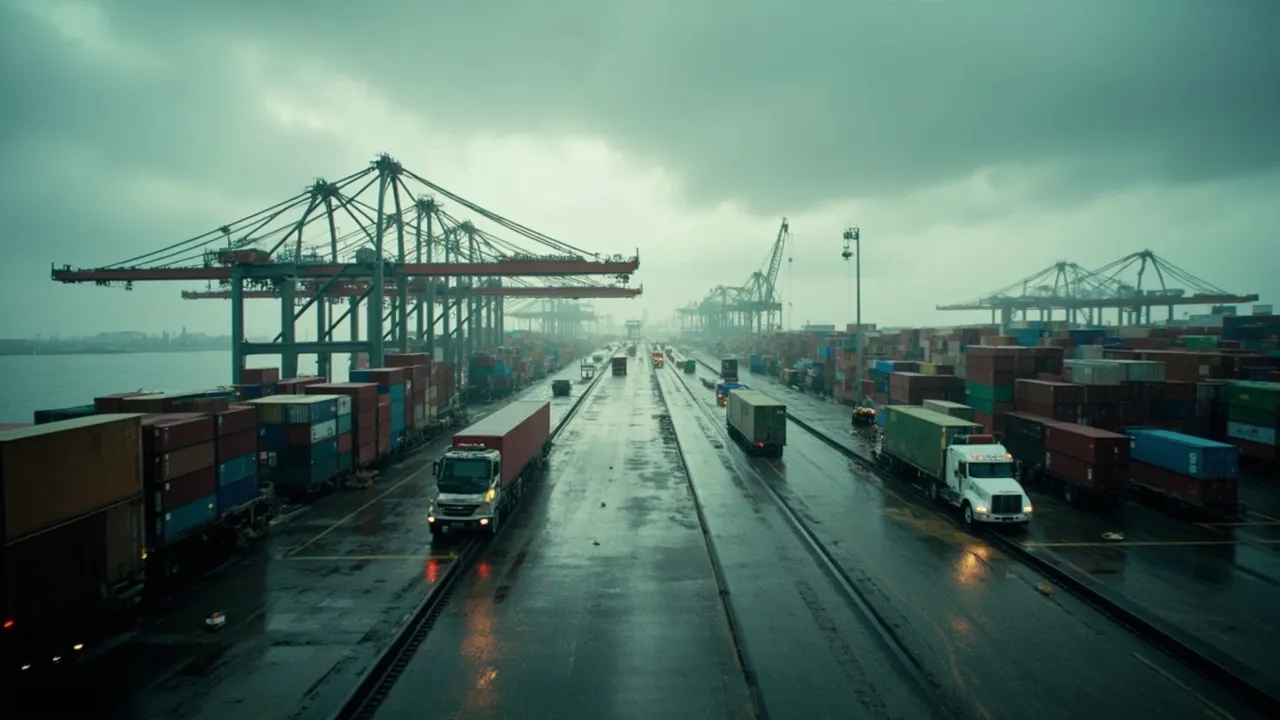
FreightWaves noted that the Port of Brownsville covers 40,000 acres, connects to the Gulf of Mexico through a 17-mile ship channel, and has 13 general cargo docks plus six liquid cargo docks. It also reported that the port completed the $295.2 million Brazos Island Harbor Improvement Project in June, deepening the Brownsville Ship Channel by 10 feet.
Those numbers matter because defense manufacturing sites do not scale on factory-floor planning alone. A shipyard build needs berth access, channel depth, heavy-haul routes, controlled gates, storage acreage, lift equipment, inland connectivity, and clear handoffs among contractors. If any one of those interfaces is weak, the schedule slips before the production line exists.
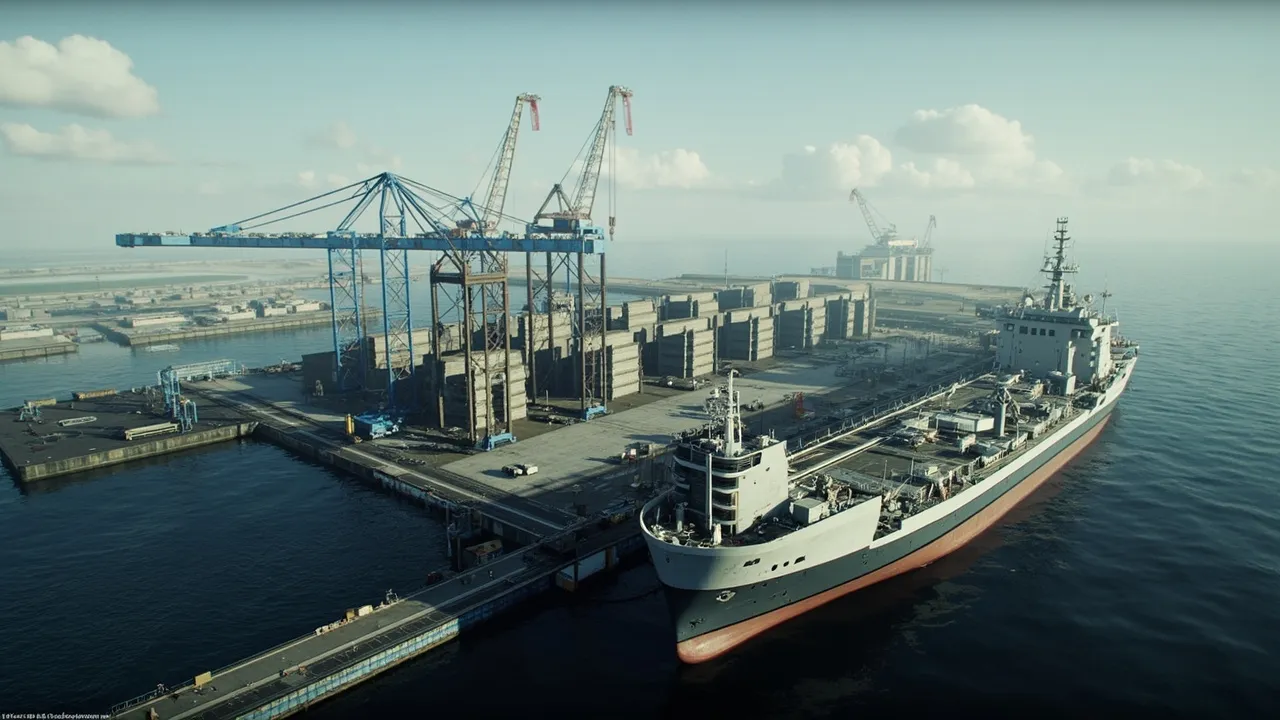
Saronic's plan makes that interface unusually visible. Port Alpha is expected to initially occupy 835 acres, with room to expand to nearly 4,400 acres. The planned yard is described as capable of producing vessels up to 850 feet long, with future expansion allowing ships exceeding 1,200 feet. Those dimensions imply a freight program with out-of-gauge moves, engineered lifting plans, component traceability, and long-lead material control.
In ordinary freight, a late pickup creates an exception. In project logistics, a late transformer, panel, crane component, steel package, or software-controlled production cell can idle crews, block follow-on work, and force expensive resequencing. The shipment record has to understand the milestone it supports.
Defense Supply Chains Need Both Speed And Redundancy
The Brownsville project also lands in a market that is already wrestling with a difficult supply-chain tradeoff. Deloitte's 2026 Aerospace and Defense Industry Outlook says the industry faces a paradox: supply chains must become more efficient and more resilient at the same time. Deloitte expects capacity to continue governing performance as materials shortages, skilled labor constraints, and geopolitical disruption keep pressure on aerospace and defense supply chains through at least 2027.
That is a hard operating brief. Efficiency pushes companies toward tighter inventory, better utilization, leaner supplier networks, and fewer idle assets. Resilience pushes them toward redundancy, supplier development, local capacity, longer contracts, buffer stock, and more visibility. Defense programs cannot simply choose one side. A late component can become a readiness issue, but carrying every possible contingency can make the program unaffordable.
Saronic's shipyard illustrates the middle ground: milestone-based control. The logistics team does not need every shipment treated as critical. It needs to know which shipment protects which milestone, which supplier or contractor owns the next dependency, and which exception deserves escalation before the project schedule absorbs the delay.
That discipline is especially important for secure and defense-adjacent freight. Electronics, communications systems, autonomy hardware, propulsion components, and controlled technical materials may require stronger access controls, documentation, routing discipline, chain-of-custody evidence, and restricted visibility than a standard industrial project. The transportation plan has to preserve both schedule and trust.
Project Logistics Is Getting Bigger And More Specialized
The market context supports the same conclusion. Mordor Intelligence estimates the global project logistics market will grow from $487.62 billion in 2026 to $624.06 billion by 2031, a 5.06% CAGR. It also reports that oversized cargo held 32.61% of the market in 2025, while heavy-lift cargo is projected to grow at a 5.65% CAGR through 2031.
That growth is not just more freight. It is more freight with consequences. Mordor points to energy transition, defense procurement, advanced manufacturing, tight heavy-lift vessel capacity, multimodal diversification, and engineered handling as forces making execution reliability more important than rate-only bids.
Shipyard construction fits that pattern. The program may need steel by barge, specialty equipment by heavy haul, electronics by secure ground or air, components from suppliers, and construction materials through regional distribution points. Some loads need escorts. Some need permits. Some need port windows. Some need controlled storage. Some need customs evidence. Some need inspection before release.
Treating those moves as isolated shipments creates blind spots. The better approach is a project freight control file that follows each package from purchase order to site installation.
Build The Readiness File Before Freight Moves
For a port-adjacent defense build, the operating file should start with the package ID. Every major component, steel lot, machinery item, controls package, and high-value electronics shipment needs an identity that links procurement, transport, receiving, and milestone status.
Next comes the milestone. A shipment should not only have an ETA. It should identify whether it supports site preparation, berth work, fabrication, utilities, security installation, crane commissioning, production equipment, or launch capability. Without that field, transportation cannot tell a routine delay from a schedule threat.
The record should also include dimensions, weight, handling requirements, lift plan status, origin, supplier readiness, carrier assignment, permit status, escort requirement, port window, gate requirement, laydown location, inspection owner, security level, and delay owner. These fields sound administrative until the project has ten contractors waiting on one missed delivery.
The most valuable field may be the escalation trigger. Defense logistics teams should decide in advance which events require action: supplier date slip, permit rejection, missed vessel cutoff, port congestion, incomplete chain-of-custody record, unavailable crane slot, failed inspection, or unapproved route change. A trigger-based plan prevents every update from becoming a meeting and every meeting from becoming a delay.
Readiness Is An Execution System
Industrial policy can announce capacity. Capital can fund it. Engineering can design it. But logistics determines whether the site becomes operational on schedule.
Saronic's Brownsville announcement is a reminder that defense readiness is not limited to finished platforms, parts inventories, or carrier capacity. It starts earlier, with project freight control for the facilities that make those platforms possible. The port, the construction site, the supplier base, the heavy-haul route, the security checkpoint, and the milestone schedule are one operating system.
CXTMS helps freight forwarders and logistics teams manage that operating system with milestone-based shipment control: package records, carrier assignments, documents, appointments, permits, exceptions, handoffs, and customer-impact ownership can live in one workflow instead of scattered spreadsheets and email threads.
For defense, port, and industrial project teams, the goal is simple: know which shipment protects which milestone before the delay becomes a readiness problem. Request a CXTMS demo to see how project freight control can keep long-lead, secure, port-adjacent builds moving.