Commercial Fleet AI Cameras Need Evidence Rules Before They Need More Video

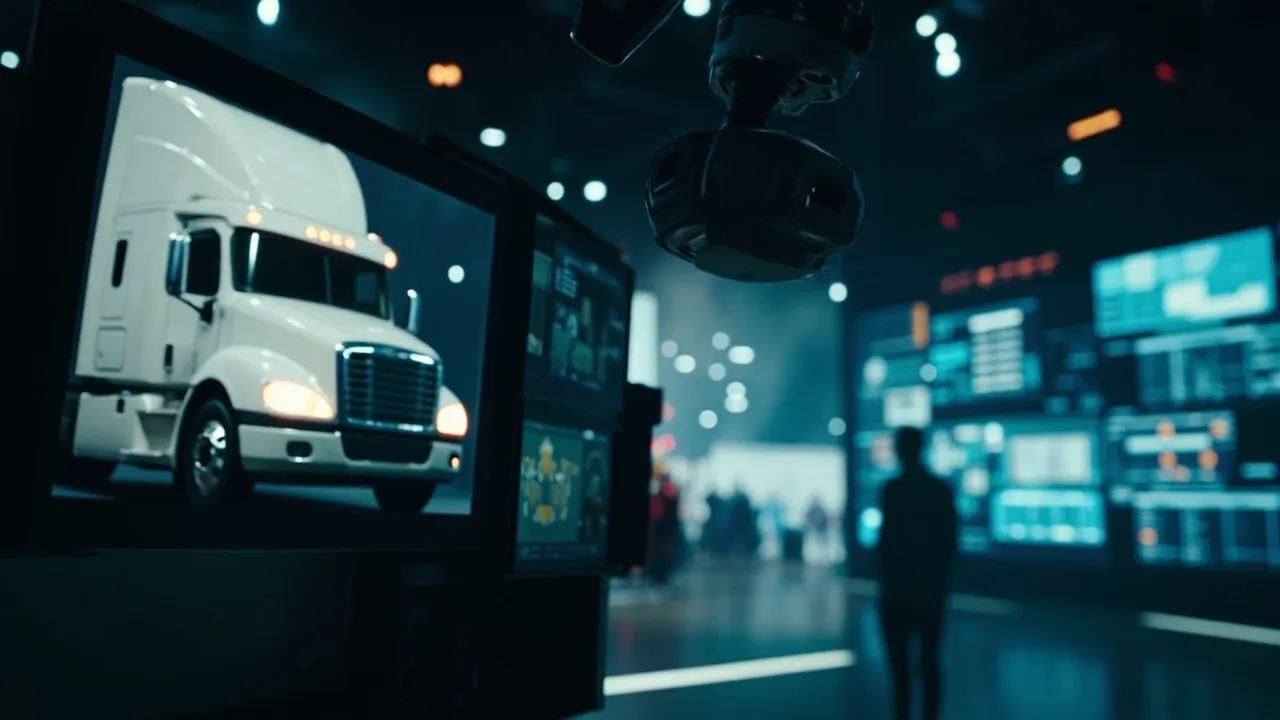
Food Logistics recently covered Pro-Vision's AI-equipped camera and inline processing module for commercial fleets, designed to support safety during lane-change, merging, and reversing maneuvers. The product announcement is narrow, but the operating signal is bigger: fleet video is moving from passive recording to automated event detection.
That shift changes the job. A camera system is no longer just a black box for accidents or a coaching aid. It can become evidence for claims, detention disputes, delivery exceptions, route deviations, carrier qualification, and customer escalations.
The risk is not that fleets will lack footage. The risk is that they will drown in footage without a rule set for what counts as evidence.
More Video Is Not The Same As Better Proof
AI cameras can detect situations that human managers would never have time to review manually: hard braking, lane drift, close following, backing events, near misses, cargo-area activity, or an unusual stop on a high-value route. That is useful only if the event is governed from the moment it is created.
Without governance, the same video event can create conflicting expectations. Safety wants to coach the driver. Claims wants to preserve footage. Customer service wants to know whether a delivery exception was valid. Legal wants retention controls. Drivers want clarity.
A transportation team cannot solve those conflicts after the fact. Once footage is viewed, shared, downloaded, attached to an email, or discussed in a customer dispute, the evidence trail already exists. That is why fleet AI camera programs need evidence rules before they scale device counts.
AI Is Entering The Transportation Back Office
The governance need is growing because AI is not stopping at the windshield. SupplyChainBrain's coverage of AI in the transportation back office describes a sector moving beyond decades of spreadsheets and manual tasks toward AI-supported transportation spend management.
That matters for video evidence. A clip that once stayed inside a safety portal may now influence an accessorial decision, detention appeal, freight claim, or carrier scorecard. The video event becomes part of the transportation record.
Gartner's 2026 supply chain technology trends also put agentic AI and physical AI among the top trends shaping supply chain technology. In a separate prediction, Gartner says 60% of supply chain disruptions will be resolved without human intervention by 2031 as AI enables increasingly autonomous supply chains.
Those numbers should make logistics leaders more disciplined, not less. If AI will increasingly detect, recommend, and resolve operational events, then the evidence behind those events needs structure. Otherwise, fleets will automate ambiguity.
Build The Evidence Rule Set
The first field is event type. A forward collision warning, backing incident, harsh brake, lane-change alert, cargo-area door event, yard stop, customer-site delay, and disputed delivery are not the same kind of evidence. Each should map to a clear operational use case.
Retention period is next. Fleets should not keep every clip forever, and they should not delete critical evidence too soon. Routine coaching clips, crash footage, cargo claims, detention disputes, and litigation holds need different retention clocks.
Driver consent and notice belong in the same operating file. Drivers need to know what is recorded, who can see clips, how coaching works, and when footage may be shared. If that policy lives in HR paperwork but not in the transportation evidence workflow, managers will improvise.
Access owner is just as important. Safety, claims, dispatch, legal, customer service, carrier management, and executives should not all have the same default access. A crash clip may need legal review before anyone else acts.
Claim link turns video from media into evidence. A clip should be tied to the shipment, vehicle, driver, carrier, route, stop, customer, order, claim number, and event time. If the video cannot be connected to the commercial record, teams will waste time proving context before they can prove facts.
Customer visibility needs its own rule. Some evidence can support a customer-facing explanation: arrival at a closed dock, blocked access, unsafe unloading condition, damaged product observed at handoff, or weather-related route disruption. But customers rarely need raw footage by default.
Exception trigger is the automation field. A low-severity coaching clip may stay in safety. A harsh brake with cargo damage risk may trigger shipment review. A long stop near a consignee may open a detention clock. A route deviation on a high-value load may trigger escalation.
Deletion policy closes the loop. If the event is resolved, outside the retention period, and not subject to a hold, the system should delete it according to policy. Keeping everything feels safe until it creates privacy risk, discovery burden, storage cost, and unclear accountability.
Evidence Rules Protect Driver Trust
Fleet video programs can fail socially even when the technology works. Drivers may accept cameras that exonerate them after a crash, but distrust systems that feel like constant surveillance with unclear consequences.
Evidence rules help because they make the system less arbitrary. Drivers can understand that a backing incident creates a coaching record for a fixed period, a collision event creates a claims record, and a disputed customer detention event can be reviewed by operations. Gartner reported in June 2026 that demand for supply chain roles requiring AI skills increased 387% from 1Q23 to 1Q26. Clear rules reduce the chance that every location, dispatcher, or safety manager invents a different practice.
Connect Camera Events To The Shipment Record
The strongest fleet video programs will treat AI camera output as transportation evidence, not as a separate safety archive. That means connecting video-triggered events to the shipment, carrier, claim, stop, exception, and customer promise.
For example, a driver arrives at a consignee during the appointment window but finds the gate closed. A governed camera event could preserve a short clip, attach it to the stop record, start a detention review, notify the customer team, and create a controlled explanation. Without that workflow, the same fact may become a phone call, a driver note, a dispatch comment, and an accessorial dispute three weeks later.
Make Fleet Video Operationally Useful
AI-equipped fleet cameras will keep getting better. They will detect more maneuvers, classify more events, and push more alerts into logistics workflows. The winning fleets will not be the ones that store the most video. They will be the ones that know which clips matter, who owns them, how long they live, and which operational records they support.
CXTMS helps freight forwarders and logistics teams connect shipment milestones, carrier actions, route exceptions, customer commitments, claims records, and audit trails in one execution workflow. That is the discipline fleet video needs: evidence tied to work, not footage trapped in another portal.
If your fleet safety data is growing faster than your evidence rules, request a CXTMS demo. CXTMS helps turn video-triggered events into governed shipment, carrier, and claims workflows.