Brazil Direct-Entry Shipping Is a Test Case for Cross-Border E-Commerce Control


Cross-border e-commerce used to be sold as a simple promise: put parcels into an international network, let the carrier handle the middle, and wait for consumers to receive the order. Brazil is showing why that model is getting too blunt.
In its latest logistics technology roundup, Inbound Logistics reported that Asendia USA launched a direct-entry solution for shipping to Brazil. The service is aimed at e-commerce sellers in the United States and other origin markets, with shipments moving from origin hubs by air, through customs clearance, and into final delivery inside Brazil under Asendia USA's managed logistics model.
That sounds like a niche service announcement. It is bigger than that. Direct entry is a signal that cross-border parcel networks are becoming more country-specific, compliance-heavy, and execution-sensitive. For forwarders, marketplaces, and brands, the winning model is no longer just "international shipping." It is Brazil shipping, Mexico shipping, EU shipping, Canada shipping: each with its own data requirements, clearance logic, cost assumptions, and customer-communication rules.
Brazil is too large to treat as an afterthought
Brazil's e-commerce market has the scale to justify specialized logistics design. Mordor Intelligence estimates the Brazil e-commerce market at $69.21 billion in 2026, rising to $150.91 billion by 2031 at a 16.87% CAGR. It also reports that B2C represented 85.23% of market share in 2025, smartphones accounted for 53.67% of transaction value, and fashion and apparel led B2C categories with 24.73% revenue share.
Those numbers matter operationally. A market that large creates parcel density, but it also creates service pressure. Consumers do not experience "cross-border" as an internal logistics category. They experience a delivery promise, a tax surprise, a delayed clearance event, or a failed final-mile handoff. When a Brazilian shopper buys from a foreign seller on a phone, the brand's reputation is riding on whether the shipment data, customs process, and local delivery network behave like one system.
Mordor also flags the harder side of the opportunity: logistics absorbs 12.6% of Brazil's GDP, compared with an 8% global mean, and freight averages about 40 kilometers per hour on intercity corridors. That is not a small planning footnote. It means international e-commerce teams need realistic landed-cost models, conservative delivery promises outside core metros, and exception workflows that can handle Brazil's geography instead of pretending it looks like a compact parcel market.
Direct entry changes the control problem
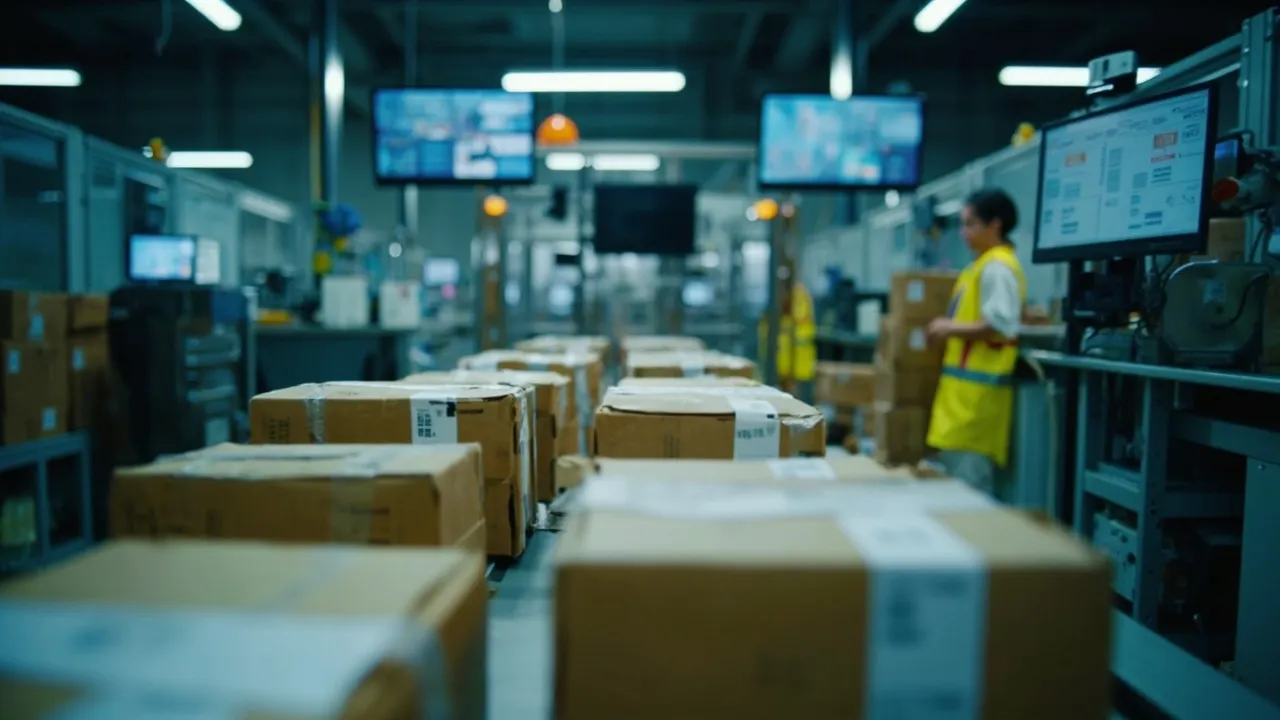
A direct-entry model typically consolidates parcels at origin, flies them into the destination country, clears them through customs, and injects them into a local delivery network. Done well, it can improve transit consistency and reduce the handoff ambiguity that plagues postal-style cross-border flows.
But direct entry also raises the control bar. The forwarder or logistics provider needs clean shipment records before uplift, not after arrival. Product descriptions, values, HS-code logic, buyer identifiers, tax assumptions, and restricted-item screening all have to be ready early enough to avoid clearance friction. A missing field is not just an admin issue; it can become dwell, customer-service volume, refund exposure, and margin erosion.
That is why direct entry should be managed as a lane playbook, not a carrier product. A Brazil playbook should define which SKUs qualify, what data must be captured at checkout, when documents are locked, how duties and taxes are estimated, who owns customs exceptions, and what message the customer sees when an order is held, released, or handed to final mile.
Cross-border failures are increasingly commercial failures
Supply Chain Dive's reporting on DavidsTea shows the same lesson from another lane. After the U.S. de minimis exemption was removed, the company established U.S. fulfillment operations in Chicago because shipping from Canada to the United States had become more complex and less predictable. The company cited higher costs, unpredictable delivery times, and delays; Supply Chain Dive reported that e-commerce sales fell 7.6% in 2025, driven mainly by an 18.4% decline in U.S. sales.
Different country pair, same operating truth: customs and parcel execution now show up directly in revenue. A tax rule, clearance delay, or delivery uncertainty can force brands to redesign inventory placement, fulfillment partners, and transportation workflows. Brazil direct entry sits on the proactive side of that same trend. Instead of waiting for complexity to break the customer experience, logistics teams are building a controlled lane around it.
What forwarders should build before scaling Brazil
Forwarders and e-commerce logistics teams should treat Brazil direct entry as a controlled operating model with five core requirements.
First, create a pre-shipment data gate. Orders should not move into consolidation until mandatory customs and commercial fields are complete. That includes product classification support, declared value rules, seller identity, buyer data, and document references.
Second, separate landed-cost assumptions from generic freight rates. Brazil's tax, clearance, and domestic delivery realities can change contribution margin quickly. Quoting needs to show the difference between transportation cost, duties and taxes, final-mile charges, and exception cost.
Third, build milestone visibility around the real handoffs: origin hub received, uplifted, arrived, customs submitted, customs released, injected to final mile, out for delivery, delivered, and exceptioned. "In transit" is not enough when customers are watching expensive cross-border orders.
Fourth, define exception ownership before launch. If customs requests more information, if a parcel is misclassified, if the customer disputes duties, or if a local delivery attempt fails, the workflow should already know who acts and what message goes out.
Fifth, use country-specific service promises. São Paulo and remote interior destinations should not share the same delivery language unless the network can truly support it. Direct entry improves control; it does not erase infrastructure constraints.
Central control still matters
The danger in country-specific playbooks is fragmentation. If every market gets its own spreadsheet, portal, and exception process, the logistics team loses enterprise visibility. The better approach is centralized control with localized rules: one shipment record, one source of milestone truth, one document repository, and country-specific logic layered into the workflow.
That is where a transportation management platform earns its keep. CXTMS helps logistics teams coordinate shipment data, carrier activity, document readiness, customer updates, and exception escalation in one operating layer. For direct-entry e-commerce lanes, that means Brazil can have its own clearance and final-mile playbook without becoming a black box.
Cross-border e-commerce is not getting simpler. The operators who win will not be the ones with the prettiest international shipping label. They will be the ones who can turn each destination country's complexity into a repeatable, visible, and commercially sane process.
Ready to bring more control to cross-border parcel and freight execution? Request a CXTMS demo and see how better shipment visibility, documentation, and exception workflows can support your next country-specific logistics playbook.